Hong Kong to draft 1st five-year blueprint to align with national 15th Five-Year Plan
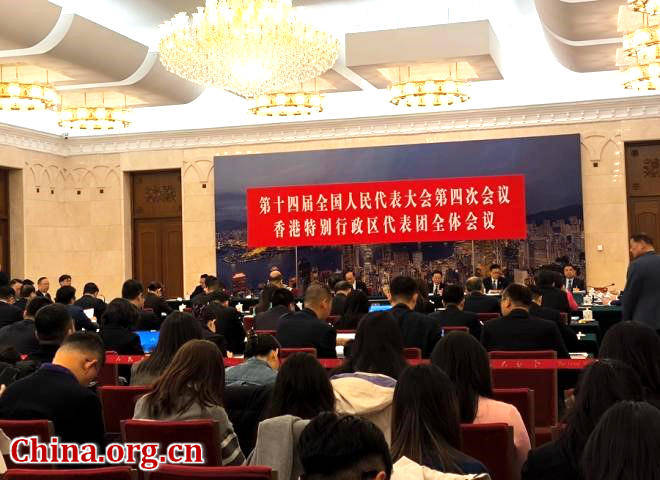
The Hong Kong delegation holds a plenary meeting at the fourth session of the 14th National People's Congress in Beijing, March 8, 2026. [Photo by Xu Xiaoxuan/China.org.cn]
Hong Kong is preparing to draft its first five-year development blueprint in a bid to better align with China's national 15th Five-Year Plan (2026-2030), said John Lee, chief executive of the Hong Kong Special Administrative Region (HKSAR).
Lawmakers in the Hong Kong delegation to the National People's Congress (NPC) said the move reflects the city's efforts to better integrate into the country's overall development and make full use of its unique strengths under the "one country, two systems" framework.
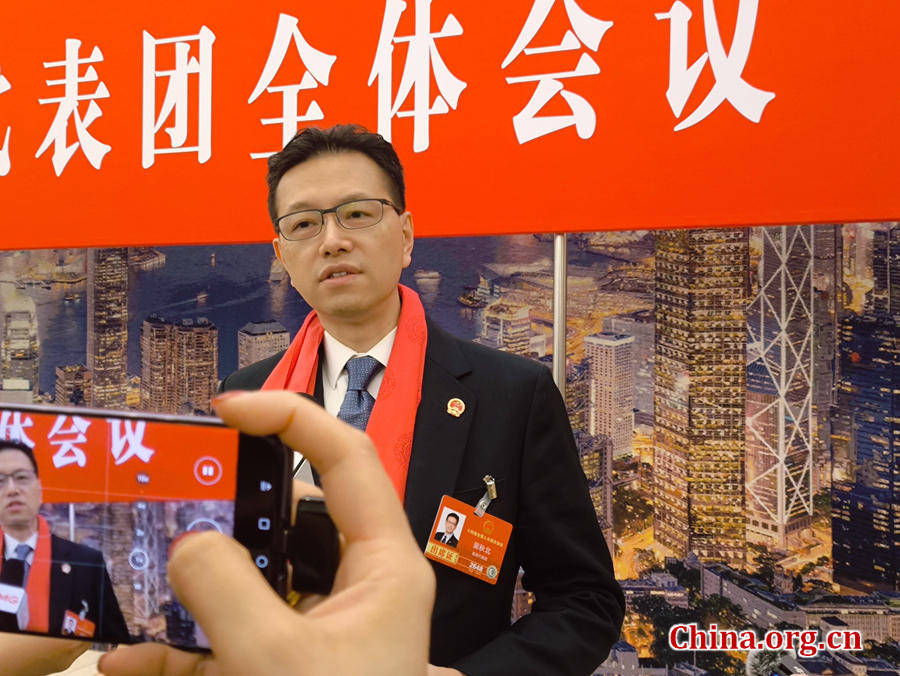
Stanley Ng Chau-pei, an NPC deputy and member of the HKSAR Legislative Council, speaks with media at the Hong Kong delegation deliberation during the fourth session of the 14th National People's Congress in Beijing, March 8, 2026. [Photo by Xu Xiaoxuan/China.org.cn]
Stanley Ng Chau-pei, a member of the HKSAR Legislative Council, emphasized that the national 15th Five-Year Plan is of great importance for both the country's development and Hong Kong's future.
"The SAR government is planning to formulate Hong Kong's first five-year plan so that the city can better align with the national strategy," Ng said. As an NPC deputy and one of the initiators of a working group focused on aligning with the national plan, he said he would actively participate in the process.
Ng noted that Hong Kong possesses well-established strengths in finance, shipping, trade and talent, which can play a greater role in serving national development needs.
The draft outline of the 15th Five-Year Plan highlights support for Hong Kong to consolidate and improve its status as an international financial, shipping, trading and aviation center.
"We should better connect our advantages with the country's development priorities," he said. "By doing so, Hong Kong can both serve national development and create greater opportunities for its own growth."
Chan Yung, also a member of the HKSAR Legislative Council, likened the relationship between the national plan and Hong Kong's development blueprint to that between the ocean and rivers.
"With the country setting a clear development direction, Hong Kong's own plan should follow the broader trend," he said.
Chan added that Hong Kong can leverage its status as an international financial center to support emerging industries. "For example, companies from the Chinese mainland engaged in robotics, ultra-high-voltage power transmission, computing power and new energy can leverage Hong Kong's capital market for listings, achieving faster development," he said.
Beyond economic opportunities, lawmakers also highlighted the governance value of establishing a medium‑term planning mechanism.
Hendrick Sin, co-founder and executive director of China Prosperity Capital, said the core significance of such a plan lies in aligning with national development goals while enhancing governance capacity.
"Relevant elements of the national 15th Five-Year Plan involving Hong Kong should be translated into concrete action plans," Sin said, citing areas such as finance, technology development and institutional connectivity within the Guangdong-Hong Kong-Macao Greater Bay Area.
He added that the blueprint could help strengthen policy continuity by moving beyond the current practice of annual policy addresses and encouraging cross-departmental coordination led by the SAR government.
Ling Youshi, vice president of the Chinese Association of Hong Kong and Macao Studies, said a long-term blueprint could also help clarify the positioning of Hong Kong's Northern Metropolis, a major development area adjacent to the border with south China's tech hub Shenzhen.
"The Northern Metropolis already has the necessary infrastructure," she said. "But once Hong Kong sets its own five-year plan aligned with the national strategy, it will be easier to determine which industries should be prioritized there."
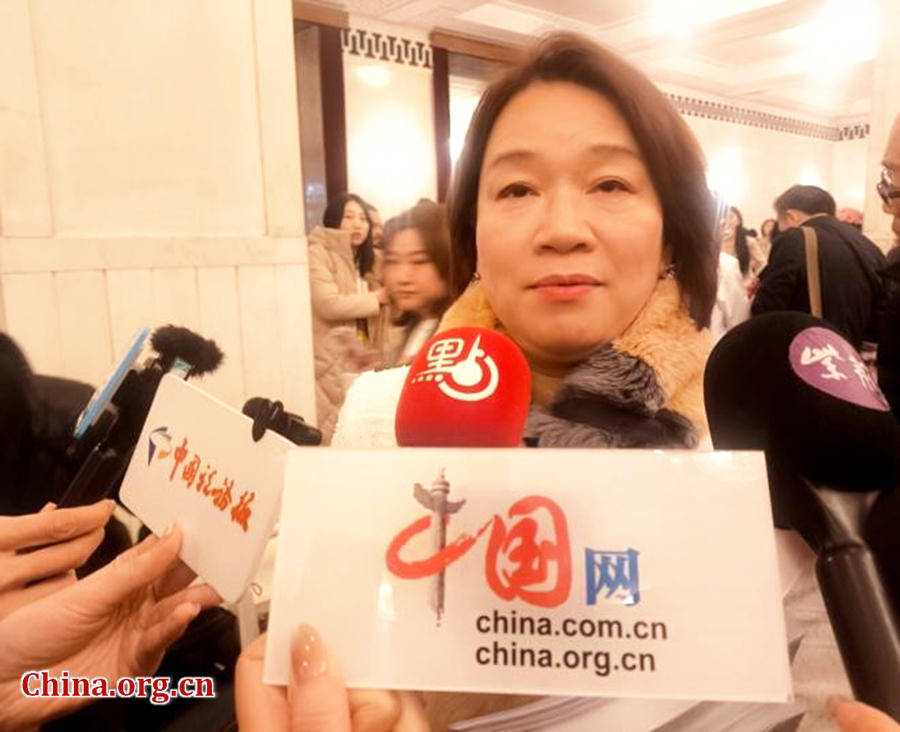
Priscilla Leung Mei-fun, an NPC deputy and member of the HKSAR Legislative Council, speaks with media after the opening of the fourth session of the 14th National People's Congress in Beijing, March 5, 2026. [Photo by Xu Xiaoxuan/China.org.cn]
Priscilla Leung Mei-fun, a Hong Kong legislator, said the city could also play a greater role in supporting China's green development, as the draft outline of the 15th Five-Year Plan highlights accelerating the green transition across the board.
Referring to the draft environmental code currently under deliberation by the national legislature, Leung said Hong Kong could further leverage its strengths in green finance.
"I believe China will become one of the world's leading green finance centers," she said. "Hong Kong should proactively use its financial expertise to support the country's green development strategy."